Leveraging Commuter Benefits 2026: Save Up to $315 Monthly
Anúncios
Leveraging commuter benefits in 2026 allows employees to save up to $315 monthly on transportation costs by using pre-tax dollars for eligible transit and parking expenses.
Anúncios
As we look ahead to 2026, understanding and utilizing your commuter benefits 2026 can significantly impact your personal finances. Imagine saving hundreds of dollars each month simply by optimizing how you pay for your daily journey to work. This guide will walk you through everything you need to know to make the most of these valuable programs.
Anúncios
Understanding Commuter Benefits: The Basics for 2026
Commuter benefits programs, often referred to as pre-tax transportation benefits, allow employees to set aside a portion of their gross income, pre-tax, to cover qualified commuting expenses. This means the money is deducted from your paycheck before taxes are calculated, reducing your taxable income and, consequently, your overall tax liability. For 2026, these benefits continue to be a powerful tool for financial wellness.
The primary advantage of these benefits lies in the tax savings. By reducing your taxable income, you pay less in federal, state, and local income taxes, as well as FICA taxes (Social Security and Medicare). This translates directly into more money in your pocket each month, rather than going to taxes. The maximum monthly pre-tax contribution limits are adjusted annually by the IRS, reflecting inflation and other economic factors, making it crucial to stay informed about the 2026 figures.
What Qualifies as an Eligible Expense?
Understanding what expenses qualify is key to maximizing your benefits. The IRS defines specific categories for pre-tax commuter benefits, ensuring clarity for both employers and employees.
- Public Transit: This includes fares for buses, subways, trains, ferries, and vanpools that accommodate at least six adults and operate for commuting purposes.
- Qualified Parking: Expenses for parking at or near your workplace, or near a public transportation stop from which you commute to work, are typically covered.
- Bicycle Commuter Benefit: While often seen as separate, some employers may offer a taxable bicycle commuter benefit, which can sometimes be integrated or offered alongside pre-tax options.
It’s important to note that expenses like fuel for personal vehicles, tolls, and general car maintenance are generally not eligible for pre-tax commuter benefits. Always confirm with your employer or benefit administrator for a comprehensive list of what is covered under your specific plan for 2026.
In essence, commuter benefits provide a direct financial advantage by allowing you to pay for necessary commuting costs with money that hasn’t been taxed yet. This system is designed to encourage public transportation and reduce the financial burden on commuters, making it an indispensable part of a smart financial strategy for 2026.
Maximizing Your Monthly Savings: Up to $315 in 2026
The potential for savings with commuter benefits in 2026 is substantial, with individuals potentially saving up to $315 monthly on transportation costs. This figure isn’t arbitrary; it’s based on the maximum allowable pre-tax contributions and an average tax bracket. Understanding how these numbers break down can help you calculate your own potential savings.
The IRS sets annual limits for pre-tax contributions to commuter benefits. For 2026, assuming an adjustment similar to previous years, the monthly limit for qualified transit and parking expenses is expected to be around $315 for each category. This means you could contribute up to $315 for transit and an additional $315 for parking, both pre-tax, if your employer offers both options and your expenses warrant it.
Calculating Your Personal Savings
To determine your actual savings, consider your marginal tax rate (federal, state, and local combined) and FICA taxes. For example, if your combined tax rate is 25% and you contribute the maximum $315, you would save approximately $78.75 in taxes each month ($315 * 0.25). Over a year, this amounts to over $945 in tax savings, which is a significant sum.
The beauty of this system is that it’s not just about the absolute dollar amount you save, but also about the ease with which you can achieve it. The funds are automatically deducted from your paycheck, so you don’t need to track receipts for tax deductions later. It’s a seamless way to reduce your financial burden and keep more of your hard-earned money.
Many employees overlook this benefit, either because they are unaware of its existence or they underestimate its financial impact. By actively participating in your employer’s commuter benefits program, you are essentially giving yourself a pay raise by reducing your tax obligations. It’s a simple yet highly effective financial strategy.
Therefore, assessing your daily commute expenses, understanding the maximum limits for 2026, and enrolling in the appropriate program are crucial steps to unlock these considerable monthly savings. Don’t leave money on the table; leverage these benefits to their fullest.
Navigating the 2026 Regulations and Enrollment
Staying informed about the latest regulations for commuter benefits in 2026 is essential for seamless enrollment and utilization. While the core structure of these benefits remains consistent, the IRS often makes minor adjustments to contribution limits and sometimes clarifies eligible expenses. Your employer’s HR department or benefits administrator will be your primary resource for the most up-to-date information.
The enrollment process is typically straightforward. Most companies offer an annual open enrollment period where employees can sign up for various benefits, including commuter benefits. However, some programs allow for enrollment or changes throughout the year, especially if there’s a qualifying life event like a change in residence or employment status. It’s always best to inquire about your specific company’s policies.
Key Considerations for Enrollment
- Contribution Limits: Be aware of the maximum pre-tax contribution limits for both transit and parking for 2026 to ensure you’re maximizing your savings without over-contributing.
- Use-It-or-Lose-It vs. Rollover: While many commuter benefit programs operate on a ‘use-it-or-lose-it’ basis for monthly contributions, some might allow a small rollover amount. Clarify this with your administrator to avoid forfeiting funds.
- Employer Contribution: Some forward-thinking employers may also contribute to your commuter benefits, further enhancing your savings. Inquire if this is an option at your workplace.
Once enrolled, you’ll typically receive a dedicated debit card or vouchers specifically for commuter expenses. This card works much like a regular debit card but is restricted to eligible transportation purchases, simplifying the payment process and ensuring compliance with IRS regulations.
Understanding the enrollment windows and regulatory specifics ensures that you can effectively plan your contributions and avoid any potential pitfalls. Proactive engagement with your benefits administrator will help you navigate any questions and ensure you are fully compliant while maximizing your financial advantage.
Types of Commuter Benefits Available
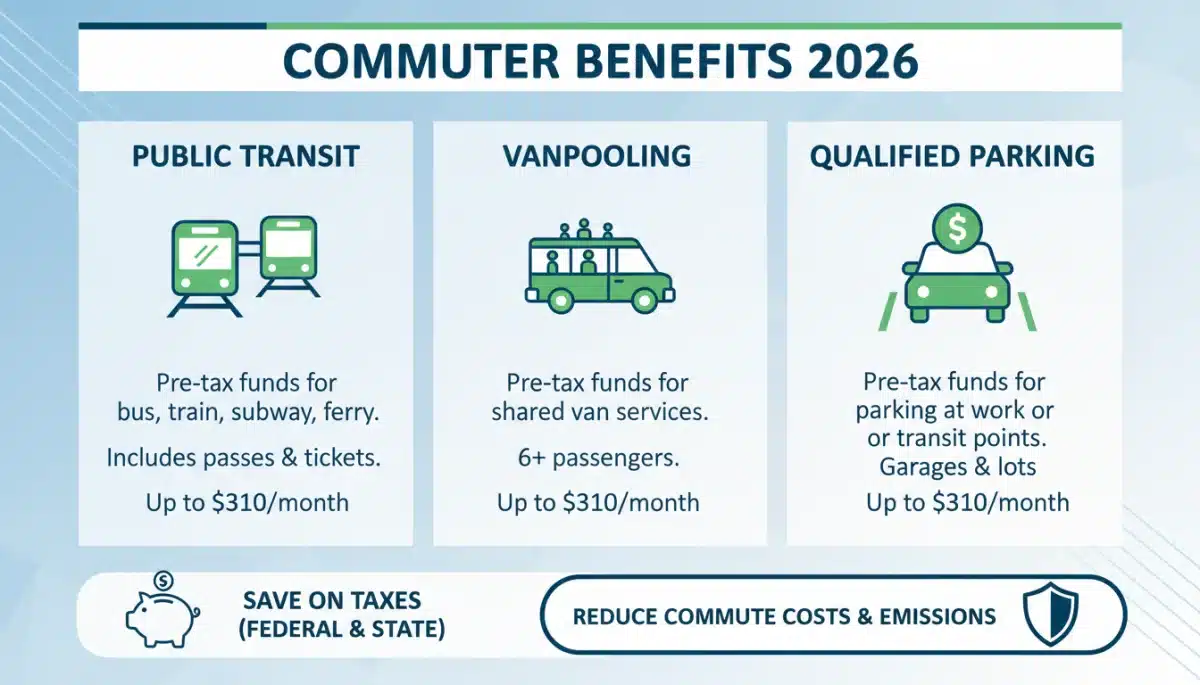
Commuter benefits aren’t a one-size-fits-all solution; they encompass various options designed to accommodate different commuting styles and needs. For 2026, the primary categories remain consistent, focusing on public transportation and qualified parking. Each type offers distinct advantages, and understanding them helps you choose the most suitable option for your lifestyle.
The flexibility of these programs is one of their strongest features. Whether you rely solely on public transit, drive and park, or utilize a combination of methods, there’s likely a benefit structure that can save you money. Employers often tailor their offerings based on their workforce’s location and commuting patterns, so it’s important to understand what your company provides.
Exploring Your Commuting Choices
- Transit Benefits: Ideal for those who use buses, subways, commuter rail, or ferries. These benefits can cover monthly passes, single-ride tickets, or stored value on transit cards.
- Vanpool Benefits: For individuals participating in qualified vanpool programs, where a vehicle carries at least six adults for commuting. This offers a cost-effective and often environmentally friendly alternative to single-occupancy driving.
- Qualified Parking Benefits: Designed for employees who drive to work and pay for parking. This can include parking garages, lots, and even metered street parking, provided it meets IRS qualifications.
Some employers might offer a combination of these benefits, allowing employees to allocate funds across different categories. For instance, you might use transit benefits for your train fare and parking benefits for parking at the train station. This hybrid approach offers maximum flexibility and savings.
It’s worth noting that while the IRS defines the general categories, the specifics of how these benefits are administered can vary by employer and the third-party administrator they use. Always check your employer’s specific plan details for 2026 to ensure you’re making the most informed choices for your commute.
Employer Advantages of Offering Commuter Benefits
While employees reap significant financial rewards from commuter benefits, employers also gain substantial advantages by offering these programs. Beyond fostering goodwill and supporting employee well-being, providing commuter benefits 2026 can lead to tangible business benefits, making it a win-win situation for all involved.
From a financial perspective, employers save on payroll taxes. Because employee contributions to commuter benefits are pre-tax, they reduce the employer’s FICA tax liability. This can add up to considerable savings, especially for larger organizations. It’s a direct financial incentive for companies to implement and promote these programs.
Enhancing Employee Satisfaction and Retention
- Attraction and Retention: Offering robust commuter benefits makes a company more attractive to potential hires and helps retain existing employees. It demonstrates a commitment to supporting employees’ financial health and work-life balance.
- Reduced Absenteeism: Reliable and affordable commuting options can reduce stress related to transportation, potentially leading to fewer instances of absenteeism and improved punctuality.
- Improved Productivity: Employees who are less stressed about their commute and finances are generally more focused and productive at work.
Beyond the financial and HR benefits, offering commuter benefits also aligns with corporate social responsibility goals. By encouraging the use of public transportation and vanpooling, companies contribute to reduced traffic congestion and lower carbon emissions, promoting a more sustainable environment. This can enhance a company’s public image and appeal to environmentally conscious consumers and employees.
In conclusion, the decision to offer commuter benefits extends beyond compliance; it’s a strategic business move. It provides a competitive edge in the talent market, contributes to a healthier bottom line, and demonstrates a commitment to sustainability, all while directly benefiting the workforce.
Common Misconceptions and Best Practices
Despite their clear advantages, commuter benefits are sometimes misunderstood, leading to underutilization. Addressing common misconceptions and adopting best practices can help both employees and employers maximize the value of these programs in 2026. Clarity and proactive communication are key to unlocking their full potential.
One common misconception is that commuter benefits are only for those who use public transportation exclusively. While public transit is a major component, qualified parking is also a significant part of the benefit, making it relevant for a broader range of commuters. Many people who drive to work and pay for parking are unaware they could be saving pre-tax dollars.
Best Practices for Employees
- Assess Your Commute: Regularly evaluate your transportation costs to ensure your contributions accurately reflect your needs. Adjust as necessary within the program guidelines.
- Understand Your Plan: Familiarize yourself with your employer’s specific commuter benefits plan, including enrollment periods, contribution limits, and eligible expenses.
- Don’t Procrastinate: Enroll early and make timely adjustments. Waiting can mean missing out on potential tax savings.
Best Practices for Employers
- Clear Communication: Regularly communicate the availability and benefits of the program to employees, especially during onboarding and open enrollment.
- Easy Access: Ensure the enrollment and management process is user-friendly, ideally through an intuitive online portal.
- Educate: Provide resources that explain what qualifies, how to enroll, and how to use the benefit card effectively.
Another misconception is that the benefit is too complicated to manage. In reality, most programs are administered through user-friendly platforms, and once set up, deductions are automatic. The perceived complexity often deter individuals from exploring a benefit that could save them substantial money.
By dispelling these myths and implementing best practices, organizations can ensure higher participation rates and greater satisfaction, ultimately leading to a more financially savvy and content workforce.
| Key Aspect | Brief Description |
|---|---|
| Monthly Savings | Employees can save up to $315 monthly on transportation costs in 2026. |
| Eligible Expenses | Includes public transit (bus, subway, train) and qualified parking expenses. |
| Tax Advantages | Contributions are pre-tax, reducing federal, state, local, and FICA tax liabilities. |
| Employer Benefits | Companies save on payroll taxes and boost employee satisfaction and retention. |
Frequently Asked Questions About Commuter Benefits in 2026
For 2026, the maximum pre-tax contribution limits for qualified transit and parking expenses are expected to be around $315 per month for each category, subject to IRS annual adjustments. This allows for significant tax savings on commuting costs.
Standard carpooling in personal vehicles is generally not covered. However, qualified vanpool expenses, which involve a vehicle carrying at least six adults for commuting purposes, are typically eligible for pre-tax commuter benefits.
No, commuter benefits are specifically designed for public transit fares and qualified parking expenses. Fuel costs, tolls, vehicle maintenance, and personal car-related expenses are not eligible for pre-tax deductions under current IRS regulations.
Most commuter benefits operate on a ‘use-it-or-lose-it’ basis, meaning unused funds typically do not roll over to the next month or year. However, some plans may allow for a small carryover. Always check your specific employer’s plan details.
Enrollment typically occurs during your employer’s annual open enrollment period or upon hiring. Contact your HR department or benefits administrator for specific instructions, forms, and deadlines to sign up for the program.
Conclusion
As we’ve explored, understanding and actively leveraging commuter benefits 2026 presents a significant opportunity for individuals to achieve substantial monthly savings on transportation costs. With potential savings of up to $315 per month, these pre-tax programs are more than just an employee perk; they are a vital financial tool. Both employees and employers stand to gain, from reduced tax burdens and enhanced financial well-being for individuals to payroll tax savings and improved employee satisfaction for businesses. By staying informed about the latest regulations, understanding eligible expenses, and actively participating in available programs, commuters can transform their daily journey into a path toward greater financial stability. Make it a priority to review your options and tap into these valuable benefits.