Digital Divide in US Education: Equitable Access Solutions

Anúncios
Bridging the digital divide in US education within the next 12 months is crucial for ensuring every student has equitable access to the technology and internet connectivity essential for modern learning and future success.
The persistent challenge of the digital divide in US education: solutions for equitable access in the next 12 months remains a critical barrier to student success. As technology increasingly underpins learning, from virtual classrooms to online resources, the disparity in access to devices and reliable internet connectivity profoundly impacts educational outcomes. How can we collectively work to close this gap and ensure every student, regardless of their socioeconomic background or geographic location, has the tools they need to thrive?
Anúncios
Understanding the Scope of the Digital Divide in US Education
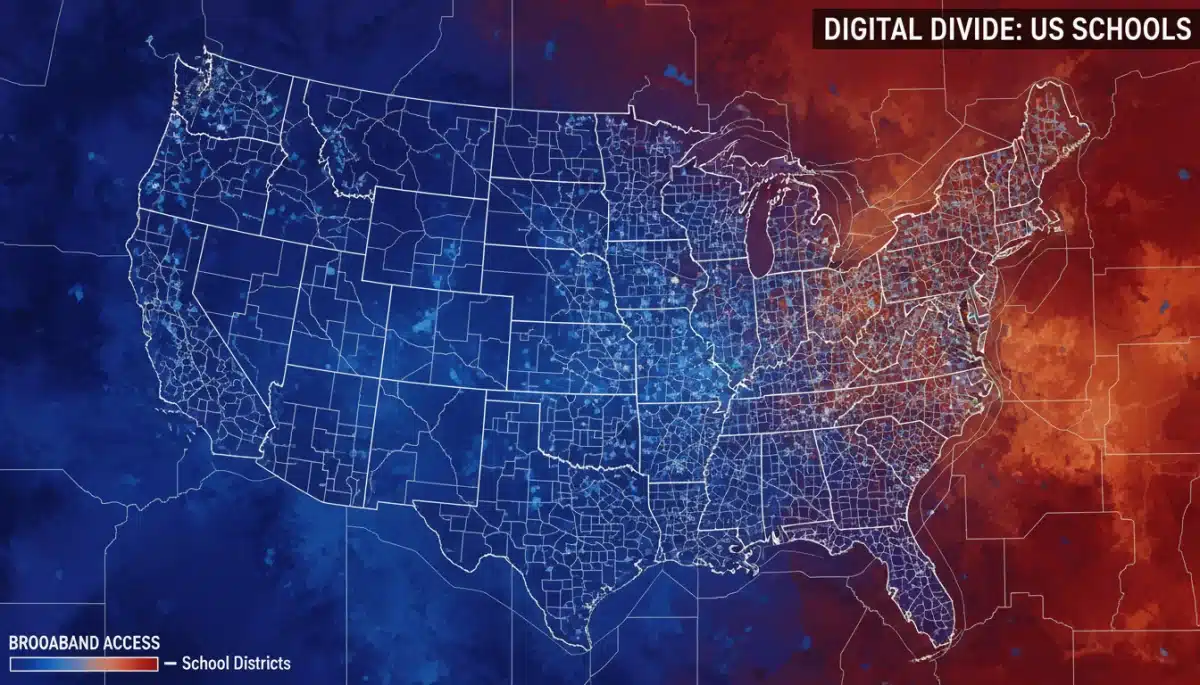
The digital divide is not merely about lacking a device; it encompasses a complex web of issues including internet access, digital literacy, and the quality of available technology. In the United States, this divide disproportionately affects rural communities, low-income households, and minority groups, perpetuating educational inequities that have long-term societal consequences.
Anúncios
During the recent shift to remote learning, these disparities became starkly apparent, with millions of students struggling to participate fully in their education due to inadequate home internet or shared devices. This crisis underscored the urgent need for comprehensive, sustained solutions that go beyond temporary fixes.
Defining the Gaps: Access, Affordability, and Adoption
The digital divide can be broken down into several key components that illuminate its multifaceted nature. Understanding these distinctions is crucial for developing targeted and effective interventions.
- Access Gap: This refers to the physical availability of internet infrastructure and devices. Many rural areas still lack high-speed broadband, and even in urban centers, device ownership can be a significant barrier for low-income families.
- Affordability Gap: Even where internet and devices are available, the cost can be prohibitive. Monthly internet bills and the price of laptops or tablets can strain family budgets, forcing difficult choices between essential needs and educational technology.
- Adoption Gap: Beyond physical access and affordability, some families may not fully adopt digital tools due to a lack of digital literacy skills, perceived relevance, or cultural barriers. This highlights the need for training and support.
Addressing these interconnected gaps requires a holistic approach that considers not just the provision of hardware, but also the broader ecosystem of support necessary for meaningful digital engagement in education. Without understanding these nuances, efforts to bridge the divide may fall short.
Federal and State Initiatives to Bridge the Gap
Recognizing the urgency, both federal and state governments have launched various initiatives aimed at closing the digital divide. These programs range from funding broadband expansion to providing direct subsidies for internet services and devices for eligible families.
The Emergency Connectivity Fund (ECF), for example, has been instrumental in helping schools and libraries purchase connected devices and broadband services for students and staff. Such programs demonstrate a commitment to addressing the issue at a systemic level, though their long-term sustainability and reach remain critical considerations.
States are also developing their own strategies, often tailored to their specific demographics and geographical challenges. These localized efforts are vital for ensuring that solutions are relevant and effective for the communities they serve.
Key Federal Programs and Their Impact
Several federal programs have been pivotal in the ongoing fight against digital inequity. Their reach and funding mechanisms are designed to tackle different facets of the problem.
- Emergency Connectivity Fund (ECF): Administered by the FCC, the ECF has provided billions of dollars to schools and libraries for internet access and devices, directly supporting students’ ability to learn remotely.
- Affordable Connectivity Program (ACP): This FCC program offers eligible low-income households discounts on internet service and connected devices, making broadband more accessible and affordable.
- Broadband Equity, Access, and Deployment (BEAD) Program: Part of the Bipartisan Infrastructure Law, BEAD allocates significant funding to states for broadband infrastructure deployment, particularly in unserved and underserved areas.
These initiatives, while significant, require continuous evaluation and adaptation to meet evolving needs and ensure that funds are utilized efficiently and effectively. Their success hinges on robust implementation and collaboration across various levels of government and community organizations.
The Role of Community Partnerships and Local Solutions
While federal and state initiatives provide crucial frameworks and funding, the most impactful solutions often emerge from local communities. Partnerships between schools, libraries, non-profits, and local businesses are proving essential in delivering tailored support directly to students and families.
These collaborations can identify specific needs within a community, whether it’s setting up Wi-Fi hotspots in underserved neighborhoods, establishing device lending programs through public libraries, or offering digital literacy workshops for parents and guardians. Local solutions are agile and responsive, addressing the unique challenges faced by different segments of the population.
Innovative Local Strategies in Action
Many communities are pioneering innovative approaches to ensure equitable access. These strategies often involve creative resource allocation and strong community engagement.
- Public-Private Partnerships: Collaborations between local governments, school districts, and internet service providers (ISPs) to offer subsidized internet plans or expand infrastructure into previously unserved areas.
- Device Refurbishment Programs: Non-profits and schools collecting, refurbishing, and distributing used computers and tablets to students who need them, often coupled with technical support.
- Mobile Hotspot Initiatives: Libraries and community centers lending out mobile Wi-Fi hotspots, or even retrofitting school buses with Wi-Fi to serve as mobile learning centers in remote or low-connectivity zones.
These grassroots efforts demonstrate the power of community-led initiatives in bridging the digital divide, complementing broader governmental programs with practical, on-the-ground support that makes a tangible difference in students’ lives.
Enhancing Digital Literacy and Skills Training
Providing devices and internet access is only half the battle; students, parents, and educators also need the skills to effectively utilize digital tools for learning. Digital literacy goes beyond basic computer operation; it encompasses critical thinking, online safety, and the ability to discern credible information.
Schools are increasingly integrating digital citizenship into their curricula, teaching students how to navigate the online world responsibly and productively. Furthermore, training programs for parents are vital, empowering them to support their children’s online learning and engage with digital resources themselves.
Building a Digitally Literate Ecosystem
A comprehensive approach to digital literacy involves multiple stakeholders working in concert. This ensures that support is available at all levels of the educational journey.
- Teacher Professional Development: Equipping educators with the skills to effectively integrate technology into their teaching practices and address the varied digital literacy levels of their students.
- Parental Workshops: Offering free workshops for parents on topics like online safety, using learning management systems, and accessing educational resources, often in multiple languages.
- Student Digital Citizenship Curricula: Embedding lessons on responsible online behavior, media literacy, and critical evaluation of information into regular classroom instruction.
By fostering a robust digital literacy ecosystem, communities can ensure that technology access translates into genuine educational empowerment, preparing students not just for academic success but for future careers and civic engagement in a digital world.
Sustainable Funding Models for Digital Equity
Achieving and maintaining digital equity requires sustainable funding models that extend beyond one-time grants or emergency allocations. Long-term solutions must address the ongoing costs of devices, internet subscriptions, technical support, and digital literacy training.
Exploring diverse funding streams, including federal appropriations, state budgets, philanthropic contributions, and private sector investments, is crucial. Furthermore, innovative financing mechanisms, such as public-private partnerships where telecommunication companies invest in infrastructure in exchange for certain benefits, can play a significant role.
Strategies for Long-Term Financial Stability
Ensuring that digital equity initiatives can continue to operate and evolve requires forward-thinking financial planning. Relying solely on short-term funding is not a viable strategy.
- Dedicated State and Local Budget Allocations: Integrating digital equity into regular educational budgets, recognizing it as a fundamental component of modern schooling rather than an add-on.
- Endowment Funds and Philanthropic Support: Establishing dedicated funds with contributions from foundations, corporations, and individual donors to provide ongoing support for technology access and programs.
- Leveraging E-Rate and Other Federal Programs: Maximizing the utilization of existing federal programs like E-Rate, which subsidizes telecommunications and internet access for schools and libraries, and advocating for their expansion.
By establishing stable and diversified funding mechanisms, communities can ensure that their efforts to bridge the digital divide are not only effective in the short term but also resilient and adaptable to future technological advancements and educational needs.
Measuring Progress and Ensuring Accountability
To effectively address the digital divide in US education: solutions for equitable access in the next 12 months, it is imperative to establish clear metrics for success and robust accountability mechanisms. Without accurate data on access, usage, and impact, it is difficult to determine which interventions are working and where resources are most needed.
Collecting granular data on internet subscription rates, device ownership, and student engagement with digital learning tools at the school, district, and state levels can provide invaluable insights. This data can then inform policy adjustments and resource allocation, ensuring that efforts are continuously optimized for maximum impact.
Key Performance Indicators for Digital Equity
Measuring progress requires a clear understanding of what success looks like. Establishing specific KPIs allows for objective evaluation of initiatives.
- Broadband Subscription Rates: Tracking the percentage of households with school-aged children that have reliable, high-speed internet access.
- Device-to-Student Ratios: Monitoring the availability of connected learning devices (laptops, tablets) per student, both at school and for home use.
- Digital Literacy Proficiency: Assessing student and educator proficiency in essential digital skills through surveys or standardized evaluations.
- Equity in Online Engagement: Analyzing participation rates in online learning platforms and resource utilization across different demographic groups to identify persistent disparities.
By systematically tracking these and other relevant indicators, stakeholders can ensure transparency, demonstrate the effectiveness of their initiatives, and make data-driven decisions to accelerate progress towards equitable digital access for all US students.
| Key Focus Area | Brief Description of Solution |
|---|---|
| Broadband Access | Expand high-speed internet infrastructure and provide subsidies for low-income families. |
| Device Provision | Implement device lending programs and secure funding for student laptops/tablets. |
| Digital Literacy | Offer training for students, parents, and educators on effective technology use. |
| Sustainable Funding | Develop long-term financial models through federal, state, and private partnerships. |
Frequently Asked Questions About Digital Equity
The primary barrier is often a combination of limited broadband infrastructure in rural areas and the high cost of internet services and devices for low-income families, creating significant educational disparities.
Federal programs like the Emergency Connectivity Fund and the Affordable Connectivity Program provide crucial funding for schools to acquire devices and internet, and offer subsidies to eligible households, directly lowering financial barriers.
Local partnerships are vital because they can tailor solutions to specific community needs, such as creating Wi-Fi hotspots, distributing refurbished devices, and providing targeted digital literacy training, ensuring direct impact.
Digital literacy includes critical thinking, media evaluation, online safety, and responsible digital citizenship. It equips individuals to navigate the digital world effectively and productively, enhancing learning outcomes.
Challenges include reliance on temporary grants, fluctuating political priorities, and the continuous evolution of technology. Sustainable funding requires dedicated budget allocations, philanthropic support, and innovative public-private partnerships.
Conclusion
Addressing the digital divide in US education: solutions for equitable access in the next 12 months is not merely an educational goal; it is a societal imperative. By combining robust federal and state initiatives with agile local partnerships, focusing on comprehensive digital literacy, and securing sustainable funding, the United States can make significant strides towards ensuring that every student has the tools and skills necessary to succeed in a rapidly evolving digital landscape. The next year presents a critical window for action, demanding collaborative and innovative approaches to dismantle these persistent barriers and foster a truly equitable educational future for all.