US Oil Reserves Drop: Winter Price Impact Explained
Anúncios
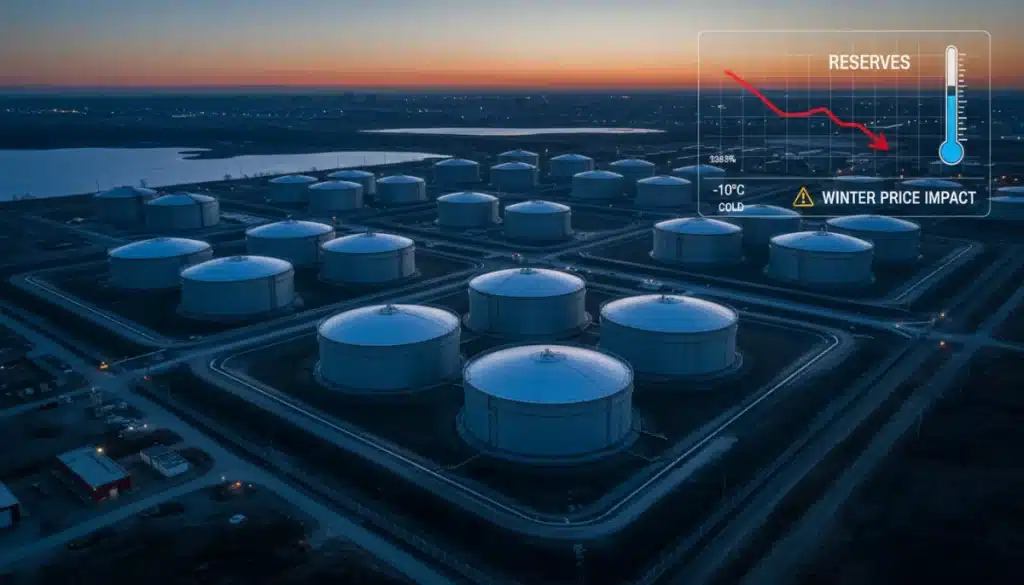
The significant decline in US oil reserves to a decade-low level raises concerns about potential impacts on winter energy prices and overall market stability, prompting a closer look at contributing factors.
As winter approaches, the news that US oil reserves have plummeted to a 10-year low is sending ripples of concern across the nation. This development could significantly influence energy prices, particularly heating costs, for American households and businesses. Understanding the implications of this decline is crucial for navigating the colder months ahead.
Anúncios
Understanding the Strategic Petroleum Reserve’s Role
The Strategic Petroleum Reserve (SPR) is the world’s largest supply of emergency crude oil, established to protect the U.S. from severe oil supply disruptions. Its primary function is to provide a buffer against global oil market volatility, ensuring energy security during crises. Recent drawdowns, however, have brought its levels to historic lows, raising questions about its capacity to respond to future shocks.
Anúncios
The SPR holds crude oil in underground salt caverns along the Texas and Louisiana Gulf Coasts. These reserves are not meant for daily market manipulation but rather for emergencies like hurricanes disrupting oil production or international supply chain issues. The decisions to release oil from the SPR are typically made by the President, often in consultation with Congress, to stabilize markets during periods of extreme price volatility or supply shortages.
Historical Context of SPR Drawdowns
- 1991 Gulf War: First emergency drawdown to stabilize markets.
- 2005 Hurricane Katrina: Released oil to counter supply disruptions in the Gulf of Mexico.
- 2011 Libyan Civil War: Coordinated international release to offset supply losses.
- 2022 Ukraine Conflict: Large-scale release to combat rising prices and global supply fears.
The recent substantial drawdowns, particularly in 2022, were intended to curb soaring gasoline prices following geopolitical events. While these releases did offer some temporary relief at the pump, they also depleted the reserve to levels not seen in a decade, creating a new set of vulnerabilities. The balance between immediate price relief and long-term energy security is a delicate one that policymakers constantly grapple with.
In essence, the SPR acts as an insurance policy. When this policy’s reserves are significantly diminished, the nation’s ability to weather future energy storms is correspondingly reduced. This makes the current low levels of US oil reserves a critical point of discussion for energy policy and economic stability.
Factors Contributing to the Decline in US Oil Reserves
Several intertwined factors have led to the current depletion of U.S. oil reserves. Geopolitical tensions, domestic policy decisions, and global supply-demand dynamics have all played significant roles in bringing the Strategic Petroleum Reserve to its lowest point in a decade. Understanding these drivers is essential to grasp the full scope of the challenge.
One of the primary contributors has been the series of coordinated releases from the SPR. The Biden administration authorized large-scale drawdowns in 2022, releasing millions of barrels to combat surging inflation and gasoline prices exacerbated by the conflict in Ukraine. While these actions aimed to alleviate immediate consumer pain, they significantly reduced the nation’s emergency stockpile. The logic was to bridge the gap until domestic production could ramp up or global markets stabilized, but the recovery of reserves has been slower than anticipated.
Global Supply Chain Disruptions
- Geopolitical Conflicts: Wars and political instability in major oil-producing regions disrupt supply lines and increase market uncertainty.
- OPEC+ Decisions: Production cuts by the Organization of the Petroleum Exporting Countries and its allies (OPEC+) directly limit global oil availability.
- Underinvestment in Production: A long-term trend of reduced capital expenditure in oil exploration and development globally means slower responses to demand increases.
Beyond intentional drawdowns, persistent global supply chain issues have made it challenging to replenish the reserve. The global oil market has been tight, with demand often outpacing supply. This tightness is partly due to geopolitical events, but also a result of underinvestment in new production capacity over the past few years. When global supply is constrained, purchasing oil to refill the SPR becomes more expensive and difficult, often competing with current consumer demand.
Furthermore, domestic production, while robust, hasn’t fully offset the combined effect of strategic releases and global market dynamics. While U.S. shale production has shown resilience, it operates within its own set of economic and environmental constraints. The confluence of these factors has created a precarious situation, where the current low levels of US oil reserves are a direct reflection of complex global and domestic energy landscapes.
Potential Impact on Winter Energy Prices
The significant reduction in US oil reserves casts a long shadow over the upcoming winter months, potentially leading to higher energy costs for consumers. With less emergency crude available, the market becomes more susceptible to price spikes from any unexpected supply disruptions or increases in demand. This vulnerability could translate directly into higher heating bills and gasoline prices across the nation.
Historically, winter sees an uptick in demand for heating oil and natural gas, especially in colder regions. When combined with diminished strategic reserves, this seasonal demand can exert upward pressure on prices. Should there be an unforeseen event – such as a severe cold snap, a hurricane impacting Gulf Coast refineries, or new geopolitical tensions – the U.S. would have fewer options to quickly inject crude into the market to stabilize prices.
Direct Consumer Costs
- Higher Heating Bills: Households reliant on heating oil or natural gas may see significant increases.
- Increased Gasoline Prices: Less crude in reserve can lead to higher prices at the pump for commuters and businesses.
- Broader Inflationary Pressures: Elevated energy costs often ripple through the economy, affecting goods transportation and manufacturing.
The psychological effect on the market is also a factor. Traders and investors closely monitor SPR levels as an indicator of market stability. Low reserves can signal increased risk, potentially prompting speculative buying that further inflates prices. This market sentiment, combined with fundamental supply-demand imbalances, creates a challenging outlook for consumers.
Moreover, the interconnectedness of global energy markets means that even domestic reserve levels can influence international pricing. A weakened U.S. position in terms of emergency supply could embolden other oil-producing nations to maintain tighter output, further limiting global availability and keeping prices elevated. For the average American family, this translates to tangible financial strain during a season already associated with higher expenses.
Therefore, the current state of US oil reserves is not just an abstract figure for energy analysts; it’s a very real concern that could hit household budgets hard this winter, making careful financial planning even more critical.
Government Strategies for Replenishment and Stabilization
Recognizing the risks associated with low US oil reserves, the U.S. government has outlined various strategies aimed at replenishing the Strategic Petroleum Reserve and stabilizing energy markets. These efforts involve a multi-pronged approach, balancing immediate needs with long-term energy security goals. The challenge lies in buying back oil at favorable prices without further disrupting the market.
One key strategy is opportunistic buying. The Department of Energy (DOE) has indicated its intention to repurchase oil for the SPR when crude prices are low enough to offer good value to taxpayers. This approach aims to refill the reserve without contributing to upward price pressure. However, consistently low prices that facilitate significant repurchases have been elusive in the volatile global market, making the replenishment process slower than desired.
Key Government Initiatives
- Opportunistic Buybacks: Purchasing crude when market prices are advantageous.
- Domestic Production Incentives: Encouraging U.S. oil and gas producers to increase output.
- International Diplomacy: Engaging with OPEC+ and other major producers to ensure stable global supply.
- Clean Energy Transition: Long-term strategy to reduce reliance on fossil fuels, thereby lessening vulnerability to oil market shocks.
Beyond direct repurchases, the government is also exploring other mechanisms, such as exchanges where oil is temporarily borrowed from the SPR and then returned at a later date, often with an additional volume as a premium. This method can help manage short-term supply issues while contributing to replenishment over time. Furthermore, there’s an ongoing emphasis on increasing domestic oil production, reducing the reliance on imports and strengthening the nation’s energy independence.
Longer-term strategies also involve accelerating the transition to cleaner energy sources. By diversifying the energy mix and reducing overall dependence on fossil fuels, the U.S. aims to mitigate the impact of global oil market fluctuations on its economy and consumers. While this is a gradual process, it is seen as a fundamental solution to enhancing energy security and reducing the need for extensive US oil reserves in the future. These combined efforts reflect a comprehensive attempt to address both the immediate and structural challenges posed by current energy market dynamics.
Global Oil Market Dynamics and Their Influence
The state of US oil reserves is inextricably linked to the broader global oil market dynamics. International supply and demand, geopolitical events, and the policies of major oil-producing nations all play a critical role in determining crude prices and the feasibility of reserve replenishment. Understanding these global forces is key to appreciating the challenges facing the U.S. energy landscape.
The global oil market is a complex web of interconnected factors. Supply is influenced by production decisions from OPEC+ countries, non-OPEC producers like the U.S., and disruptions caused by conflicts or natural disasters. Demand, on the other hand, is driven by global economic growth, industrial activity, and seasonal variations. Any significant shift in these factors can send ripples across the market, impacting prices and availability.
Major Global Market Influencers
- OPEC+ Production Quotas: Decisions by this cartel directly control a significant portion of global oil supply.
- Geopolitical Tensions: Conflicts in regions like the Middle East or Eastern Europe can disrupt supply routes and create uncertainty.
- Global Economic Health: Recessions reduce demand, while robust growth increases it, directly affecting oil prices.
- Emerging Market Demand: Rapid industrialization and population growth in countries like India and China drive significant long-term demand.
Recent years have seen heightened volatility in the global oil market. The conflict in Ukraine, for instance, led to sanctions on Russian oil, a major global supplier, forcing a realignment of trade flows and contributing to price hikes. Simultaneously, OPEC+ nations have often opted for production cuts to support prices, sometimes in defiance of calls from major consuming nations to increase output. These decisions directly affect the supply available to countries like the U.S. and influence the cost of refilling reserves.
Furthermore, the pace of the global energy transition also plays a role. While the long-term trend is towards renewable energy, the transition is not uniform, and fossil fuels still dominate current energy consumption. This creates a scenario where reduced investment in traditional oil production, coupled with continued high demand, can lead to supply deficits and higher prices. The intricate dance of these global factors means that even domestic efforts to manage US oil reserves must always consider the wider international context.
Consumer Preparedness and Energy Efficiency
Given the potential for higher energy prices this winter due to low US oil reserves, proactive consumer preparedness and increased energy efficiency become more critical than ever. While government and global entities work on supply-side solutions, individuals and households can take tangible steps to mitigate the impact on their budgets and reduce overall energy consumption. Being prepared means not just bracing for higher costs, but actively working to lower demand.
One of the most effective strategies is improving home energy efficiency. Simple measures can significantly reduce heating costs. This includes ensuring proper insulation in walls and attics, sealing drafts around windows and doors, and maintaining heating systems. Regular furnace tune-ups can ensure they operate at peak efficiency, consuming less fuel to heat your home. These small investments can lead to substantial savings over the colder months.
Practical Energy-Saving Tips
- Seal Air Leaks: Use caulk and weatherstripping around windows and doors.
- Improve Insulation: Check attic and wall insulation levels.
- Programmable Thermostats: Set back temperatures when away or asleep.
- Regular HVAC Maintenance: Ensure heating systems are running efficiently.
- Energy-Efficient Appliances: Consider upgrading older appliances to newer, more efficient models.
Beyond structural improvements, daily habits also play a significant role. Utilizing programmable thermostats to lower temperatures when no one is home or during sleeping hours can cut down on energy usage. Wearing warmer clothing indoors can allow for a slightly lower thermostat setting. Even simple actions like opening curtains on sunny days to let in natural heat and closing them at night to retain warmth can make a difference.
For those who rely on gasoline for transportation, consolidating trips, using public transport, or exploring carpooling options can help reduce fuel consumption. Considering the purchase of more fuel-efficient vehicles or electric alternatives, if feasible, is a long-term strategy. Ultimately, while the larger issues surrounding US oil reserves are beyond individual control, empowering consumers with practical steps towards energy efficiency can provide a much-needed buffer against rising winter prices.
| Key Point | Brief Description |
|---|---|
| Low Oil Reserves | US oil reserves have dropped to a 10-year low, raising concerns about energy security. |
| Winter Price Impact | Diminished reserves could lead to higher heating and fuel costs for consumers this winter. |
| Replenishment Efforts | Government strategies include opportunistic buying and domestic production incentives. |
| Consumer Actions | Energy efficiency and conservation are vital for households to manage costs. |
Frequently Asked Questions About US Oil Reserves
The SPR is an emergency stockpile of crude oil maintained by the U.S. government. Its purpose is to provide a buffer against major supply disruptions, stabilize energy markets during crises, and ensure national energy security. It’s the world’s largest government-owned emergency oil supply.
The decline is primarily due to large-scale releases in 2022 to combat rising gasoline prices and global supply fears following geopolitical events. Additionally, challenges in replenishing due to tight global oil markets and high prices have contributed to the prolonged low levels.
Low reserves increase market vulnerability to supply shocks, potentially leading to higher prices for heating oil, natural gas, and gasoline. Seasonal demand increases during winter will likely exacerbate these price pressures, impacting household budgets significantly.
The government is pursuing an opportunistic buying strategy, repurchasing oil when market prices are favorable. They are also encouraging domestic production and engaging in international diplomacy to ensure stable global supply, aiming for a strategic and cost-effective replenishment.
Consumers can prepare by improving home energy efficiency through better insulation, sealing drafts, and maintaining heating systems. Adopting energy-saving habits like using programmable thermostats and consolidating travel can also significantly reduce winter energy expenses.
Conclusion
The current state of US oil reserves, hovering at a 10-year low, presents a significant concern for the upcoming winter and beyond. While the drawdowns were intended to stabilize markets during a period of intense volatility, their lingering effect underscores the fragility of global energy supplies and the critical importance of strategic reserves. As we move into colder months, the potential for increased energy prices impacting American households is a tangible threat. Both governmental strategies for replenishment and individual efforts towards energy efficiency will be crucial in navigating this complex energy landscape. The situation demands continued vigilance and adaptive responses to ensure both energy security and economic stability.