Disability Benefits 2026: SSI, SSDI Adjustments & Strategies

Anúncios
This guide provides a comprehensive overview of Disability Benefits 2026, detailing anticipated adjustments to SSI and SSDI, eligibility criteria, and effective application strategies to help individuals navigate the complex system.
Anúncios
Navigating the complex landscape of disability benefits can be daunting, especially when anticipating future changes. For those relying on or considering applying for support, understanding Disability Benefits 2026, including Social Security Income (SSI) and Social Security Disability Insurance (SSDI), is crucial. This article delves into the projected adjustments, eligibility requirements, and strategic approaches to secure these vital benefits, ensuring you are well-prepared for the future.
Anúncios
Understanding SSI and SSDI: Core Differences for 2026
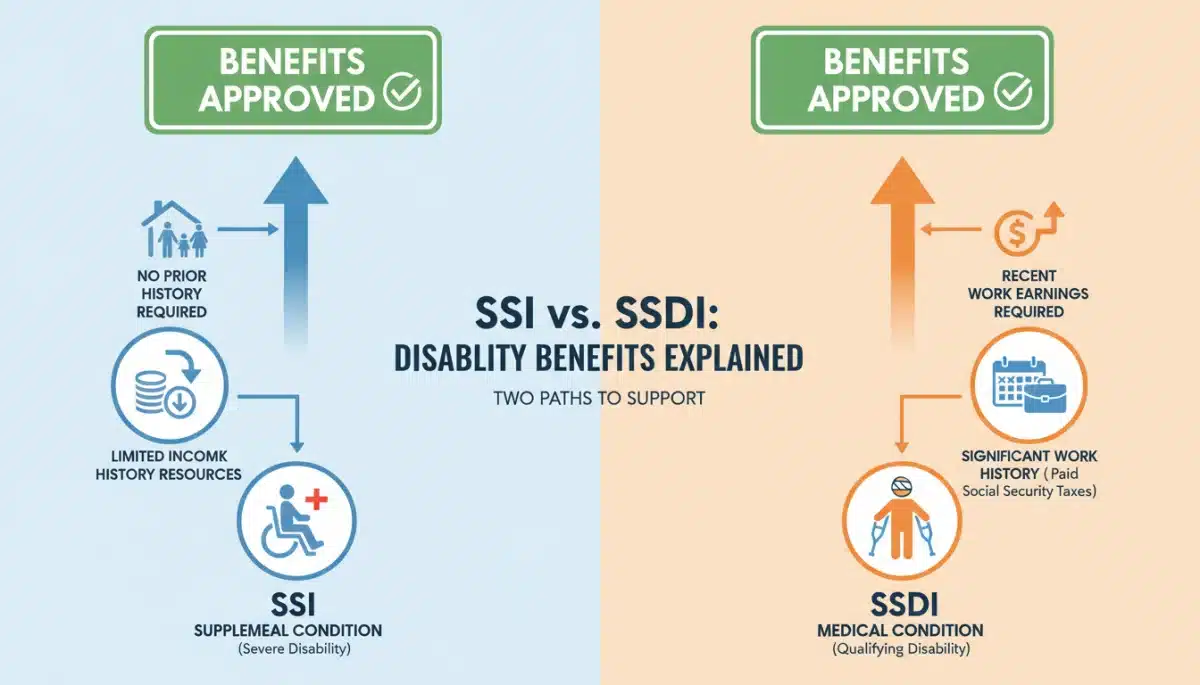
Before delving into 2026 adjustments, it’s essential to grasp the fundamental distinctions between Supplemental Security Income (SSI) and Social Security Disability Insurance (SSDI). While both programs provide financial assistance to individuals with disabilities, their eligibility criteria and funding mechanisms differ significantly.
SSDI is funded through payroll taxes and is available to individuals who have worked and paid Social Security taxes for a sufficient period. It’s essentially an insurance program. SSI, on the other hand, is a needs-based program for low-income individuals who are aged, blind, or disabled, regardless of their work history.
Eligibility Criteria: Work Credits vs. Financial Need
For SSDI, eligibility hinges on your work history and the accumulation of ‘work credits.’ These credits are earned by working and paying Social Security taxes. The number of credits needed depends on your age when you become disabled. SSI eligibility, conversely, focuses on your financial resources and income. There are strict limits on how much income and assets you can have to qualify for SSI.
- SSDI Work Credits: Generally, you need 40 credits, with 20 earned in the last 10 years ending with the year you become disabled.
- SSI Income Limits: Monthly income and countable resources must fall below specific federal thresholds, which are subject to annual adjustments.
- Disability Definition: Both programs use the same strict definition of disability, requiring an inability to engage in any substantial gainful activity due to a medically determinable physical or mental impairment that has lasted or is expected to last for a continuous period of not less than 12 months or result in death.
Understanding these core differences is the first step in determining which program, if any, you might qualify for as we approach 2026. Many individuals may even be eligible for both, depending on their unique circumstances.
Anticipated Cost-of-Living Adjustments (COLAs) in 2026
A critical aspect of Disability Benefits 2026 will be the annual Cost-of-Living Adjustment (COLA). COLAs are designed to help Social Security and SSI benefits keep pace with inflation, ensuring beneficiaries maintain their purchasing power. These adjustments are usually announced in the fall of the preceding year and take effect in January.
While the exact COLA for 2026 cannot be predicted with certainty, it will be based on the Consumer Price Index for Urban Wage Earners and Clerical Workers (CPI-W) from the third quarter of 2025. Economic projections and inflation trends will play a significant role in determining the percentage increase.
Impact on Benefit Amounts
A COLA increase directly translates to higher monthly benefit payments for both SSDI and SSI recipients. For SSDI, the increase applies to your primary insurance amount (PIA). For SSI, the federal benefit rate (FBR) will see an adjustment, which is the maximum federal payment an individual can receive.
- Increased Purchasing Power: COLAs help protect beneficiaries from the erosion of their income due to rising living costs.
- Varying Percentages: COLA percentages can fluctuate significantly year to year, reflecting the economic climate.
- SSI Federal Benefit Rate: The FBR is the baseline for SSI, and its adjustment impacts all recipients unless state supplements or other income sources reduce their payable amount.
It’s important for beneficiaries to monitor these announcements closely as 2025 progresses to accurately project their income for 2026. These adjustments are vital for financial planning and maintaining a stable quality of life.
Potential Policy Changes and Legislative Impacts on Disability Benefits 2026
Beyond the annual COLA, Disability Benefits 2026 could also be influenced by potential policy shifts and legislative actions. The Social Security system faces ongoing discussions about its long-term solvency, which could lead to proposals for reform. While major overhauls are often politically challenging, smaller, incremental changes are always a possibility.
These changes could affect various aspects, such as eligibility criteria, the disability determination process, or even the taxability of benefits. Staying informed about legislative debates and proposals is crucial for anyone involved with disability benefits.
Areas of Potential Reform
Discussions often revolve around adjusting the retirement age, modifying the benefit formula, or increasing the payroll tax rate. While these primarily impact retirement benefits, any changes to the overall Social Security system can have ripple effects on disability programs.
Another area of focus could be on work incentives and return-to-work programs for disability beneficiaries. The Social Security Administration (SSA) continually seeks ways to encourage recipients to re-enter the workforce if their condition improves, without immediately losing their benefits.
- Work Incentives: Programs like the Ticket to Work aim to help beneficiaries find employment while still receiving support.
- Medical Review Process: The frequency and rigor of continuing disability reviews (CDRs) could be subject to adjustments.
- Advocacy Groups: Organizations advocating for people with disabilities actively monitor legislative proposals and provide input to policymakers.
While predicting specific legislative changes is difficult, being aware of the ongoing dialogue surrounding Social Security’s future is vital. These discussions shape the environment in which disability benefits operate.
Strategic Application for SSI and SSDI in 2026
Applying for disability benefits can be a lengthy and intricate process. For Disability Benefits 2026, a strategic approach is key to increasing your chances of approval. This involves meticulous preparation, understanding the SSA’s requirements, and potentially seeking professional assistance.
The SSA evaluates applications based on a five-step sequential evaluation process, starting with whether you are engaged in substantial gainful activity and ending with whether you can perform any other type of work. Medical evidence is paramount throughout this entire process.
Key Steps for a Successful Application
Begin by gathering all relevant medical records, including diagnoses, treatment histories, medication lists, and doctors’ notes. The more comprehensive and consistent your medical documentation, the stronger your case will be. It’s also crucial to accurately complete all SSA forms, providing detailed and consistent information about your condition and its impact on your daily life.
- Comprehensive Medical Records: Ensure all treating physicians provide detailed reports on your condition’s severity and limitations.
- Accurate Application Forms: Fill out all forms completely and truthfully, avoiding any inconsistencies.
- Doctor’s Support: Strong support from your treating physician, detailing your functional limitations, is invaluable.
- Vocational Evidence: If applicable, provide details about your past work history and how your disability prevents you from performing similar or other work.
Many applicants find the process challenging and often face initial denials. Persistence and understanding the appeals process are also critical components of a successful application strategy.
Navigating the Appeals Process for Disability Claims
It is a common reality that many initial applications for Disability Benefits 2026 will be denied. This doesn’t mean your claim is without merit; rather, it often indicates the need for more detailed information or a clearer presentation of your case. Understanding and effectively navigating the appeals process is therefore a crucial strategy for many applicants.
The appeals process generally involves several levels, starting with Reconsideration, followed by a hearing before an Administrative Law Judge (ALJ), then review by the Appeals Council, and finally, federal court review. Each stage has specific deadlines that must be strictly adhered to.
Maximizing Your Chances on Appeal
During the reconsideration phase, new medical evidence can be submitted. This is an opportunity to strengthen your case with additional documentation that might not have been available during the initial application. If denied again, preparing for an ALJ hearing is critical. This is often the best chance for approval, as you can present your case in person, with legal representation, and cross-examine vocational or medical experts.
- Strict Deadlines: Be aware of the 60-day deadline to appeal each decision.
- New Medical Evidence: Use the appeals process to submit any updated or previously unsubmitted medical documentation.
- Legal Representation: Hiring an attorney specializing in disability law significantly increases your chances of success at the ALJ hearing.
- Preparation for Hearing: Attorneys can help prepare you for questioning and ensure all relevant evidence is presented effectively.
Do not be discouraged by an initial denial. The appeals process is designed to give applicants multiple opportunities to present their case, and many successful claims are approved at the hearing level.
Resources and Support for Disability Applicants in 2026
As you prepare for or navigate Disability Benefits 2026, numerous resources and support systems are available to assist you. These can range from official government resources to legal aid and advocacy groups, all designed to help you understand your rights and effectively manage your application or appeal.
The Social Security Administration’s official website is an invaluable first stop, offering detailed information on both SSI and SSDI, application forms, and frequently asked questions. They also provide local office assistance and phone support.
Where to Find Help
Beyond the SSA, consider consulting with a qualified disability attorney or advocate. These professionals specialize in disability law and can provide expert guidance through every stage of the application and appeals process. Many work on a contingency basis, meaning they only get paid if you win your case.
- Social Security Administration (SSA): Official website, local offices, and national toll-free numbers for direct assistance.
- Disability Attorneys/Advocates: Legal professionals who specialize in disability claims and can represent you.
- Non-profit Organizations: Many organizations offer free advice, resources, and support networks for people with disabilities.
- Medical Professionals: Your doctors can provide critical medical evidence and support letters for your application.
Utilizing these resources can significantly alleviate the stress and complexity associated with applying for disability benefits, increasing your likelihood of a positive outcome.
| Key Aspect | Brief Description |
|---|---|
| SSI vs. SSDI | SSI is needs-based (income/assets), SSDI is work-credit based (work history). |
| 2026 COLA | Anticipated Cost-of-Living Adjustment to combat inflation, announced late 2025. |
| Application Strategy | Meticulous medical documentation and accurate forms are crucial for approval. |
| Appeals Process | Multiple stages, including reconsideration and ALJ hearings, require strict adherence to deadlines. |
Frequently Asked Questions About Disability Benefits 2026
SSI (Supplemental Security Income) is a needs-based program for low-income individuals with disabilities, regardless of work history. SSDI (Social Security Disability Insurance) is for those who have worked and paid Social Security taxes, based on their work credits.
COLAs are annual increases designed to keep benefits aligned with inflation. The exact percentage for 2026 will be announced in late 2025, based on the Consumer Price Index, leading to higher monthly payments for most beneficiaries.
Comprehensive medical records, including diagnoses, treatment histories, doctors’ notes, and medication lists, are crucial. Detailed information about how your condition affects daily activities and work capacity is also vital.
If your application is denied, you should immediately file an appeal. The appeals process has several stages, starting with reconsideration. It’s often beneficial to seek legal assistance at this stage to strengthen your case with additional evidence.
Yes, both SSI and SSDI have work incentive programs to encourage beneficiaries to return to work without immediately losing benefits. These programs have specific rules regarding earned income and reporting requirements, so it’s important to understand them fully.
Conclusion
Preparing for Disability Benefits 2026 requires a proactive and informed approach. Understanding the nuanced differences between SSI and SSDI, anticipating annual adjustments, and navigating the application and appeals processes effectively are paramount. By staying informed, meticulously documenting your medical condition, and utilizing available resources, individuals seeking or receiving disability benefits can better secure their financial stability and well-being in the years to come.